
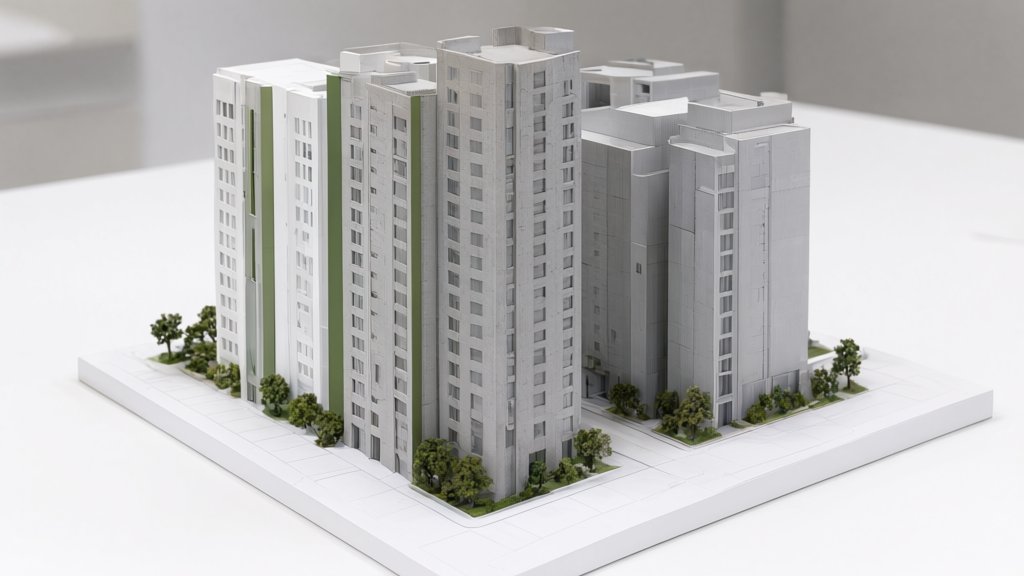
Florida enacted another set of affordable-housing changes in 2026 through House Bill 1389. The Governor approved the measure on June 26, and the bill was recorded as Chapter No. 2026-179 on June 29.
H1389 addresses the relationship between statewide housing requirements and local development decisions. It also includes an optional incentive involving land donations for military-family housing and directs state policy research into financing and tiny homes.
What H1389 covers
The official bill page describes several components:
- Counties and municipalities must authorize multifamily and mixed-use residential uses for specified property.
- The act sets requirements for certain proposed developments.
- Counties and cities may not use other dimensional controls to restrict the height of certain covered developments and may not require specified setbacks or stepbacks.
- Certain applicants must be allowed to submit revised applications, written requests, and notices of intent to account for the act's changes.
- A local government may offer a density-bonus incentive to a landowner who makes a qualifying real-property donation to help provide affordable housing for military families.
- The Office of Program Policy Analysis and Government Accountability must evaluate mezzanine finance and the potential use of tiny homes for specified purposes.
The enrolled text controls the exact meaning of terms such as specified property, covered development, dimensional restriction, qualifying donation, and density bonus.
The legislative votes
The bill changed during the legislative process. A March 4 House third-reading roll call recorded 76-29, with 12 members not voting. After Senate amendments and further House action, the House passed the amended measure on March 12 by 98-4, with 15 members not voting. The later House roll call shows the individual record for that vote.
The Senate concurred in the House changes and passed the measure on March 13 by 35-0, with one member absent and three not voting. The Senate roll call identifies each recorded vote.
The changing margins are factual. The roll calls do not, without additional records, explain which amendment changed a member's position or why.
The policy questions inside the text
H1389 creates practical questions for residents, local officials, housing applicants, and landowners:
- Which parcels and developments fall under the mandatory use rules?
- Which local height, setback, and stepback decisions remain available?
- How will revised applications and notices be processed?
- What conditions attach to a density bonus for a donated property?
- What will the required state evaluation say about mezzanine financing and tiny homes?
Those questions can be answered only by reading the complete act, future local procedures, and the required research when it becomes available.
What the saved record does not prove
The legislative packet does not quantify how many homes the act will produce, how quickly they will be built, whether prices or rents will change, or what administrative costs local governments will incur. It does not establish that developers, local governments, military families, or current residents will experience a particular outcome.
What the record does establish is narrower: Florida adopted defined housing-use and development rules, permitted an identified local incentive, required additional policy evaluation, and recorded substantial support on the final cited floor votes.