
What financial penalties can an HOA face for willfully violating AB 1684?
Short answer
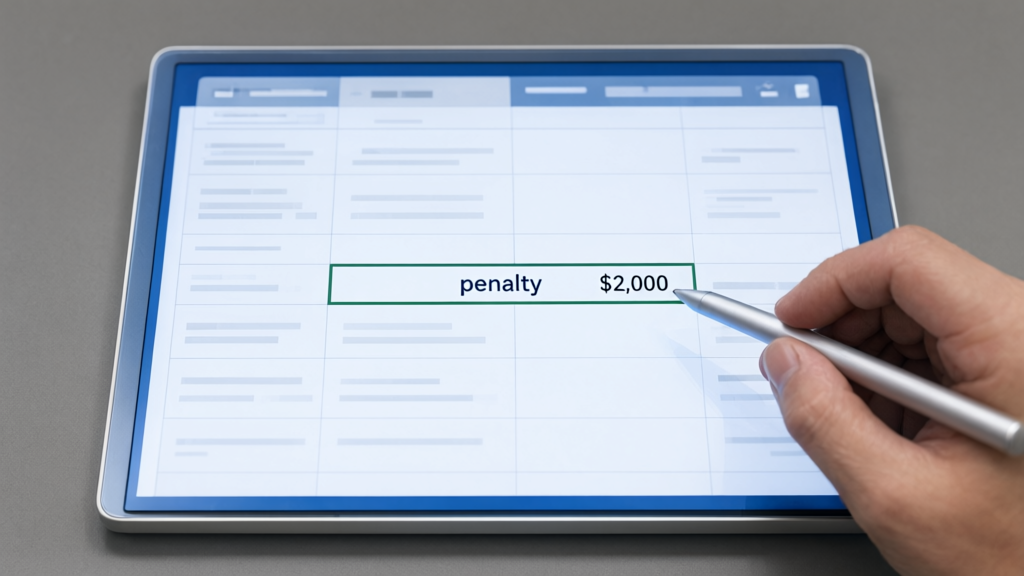
If a homeowners association (HOA) willfully violates the provisions of Assembly Bill 1684, it faces specific financial consequences. The HOA becomes liable for the homeowner’s actual damages and must pay a civil penalty of up to $2,000. Additionally, if the homeowner prevails in a legal action to enforce these rights, the HOA is responsible for paying reasonable attorney’s fees and court costs.
What the bill or law says
AB 1684 adds Section 4738 to the California Civil Code. This section explicitly outlines the penalties for non-compliance. According to the bill text, an association that "willfully violates this section shall be liable to the member for actual damages occasioned thereby" [sourceUrl].
The legislation further mandates that the violating association "shall pay a civil penalty to the member in an amount not to exceed two thousand dollars ($2,000)" [sourceUrl]. The bill also includes a provision for legal costs, stating that a member who wins a civil action to enforce their rights under this section is entitled to reasonable attorney’s fees and court costs [sourceUrl]. These penalties apply specifically when the violation is determined to be willful, meaning the HOA knowingly acted against the law.
How it works in practice
In a practical scenario, if an HOA denies a request to install a compliant window air conditioner or charges an unauthorized fee for such an installation, the homeowner may take legal action. To trigger the maximum penalties, the homeowner would likely need to prove that the HOA’s violation was willful rather than accidental or based on a misunderstanding of the new rules.
If a court finds in favor of the homeowner, the HOA would first need to compensate the homeowner for any actual financial loss suffered, such as the cost of removing a wrongly installed unit or refunds of illegal fees. On top of those damages, the HOA would pay the civil penalty directly to the homeowner. Finally, the HOA would cover the homeowner’s legal bills, which can be a significant financial burden for the association. This structure is designed to discourage HOAs from ignoring the new protections for cooling systems.
What the source does not answer
The bill text does not define the specific legal standard for proving a violation is "willful." It is unclear whether a single instance of non-compliance constitutes willfulness or if a pattern of behavior is required. The sources also do not specify how courts will calculate "actual damages" in cases where no direct monetary loss occurred, such as when a request was simply denied without financial cost to the homeowner. Furthermore, the text does not detail the process for collecting these penalties if an HOA refuses to pay voluntarily after a judgment.