
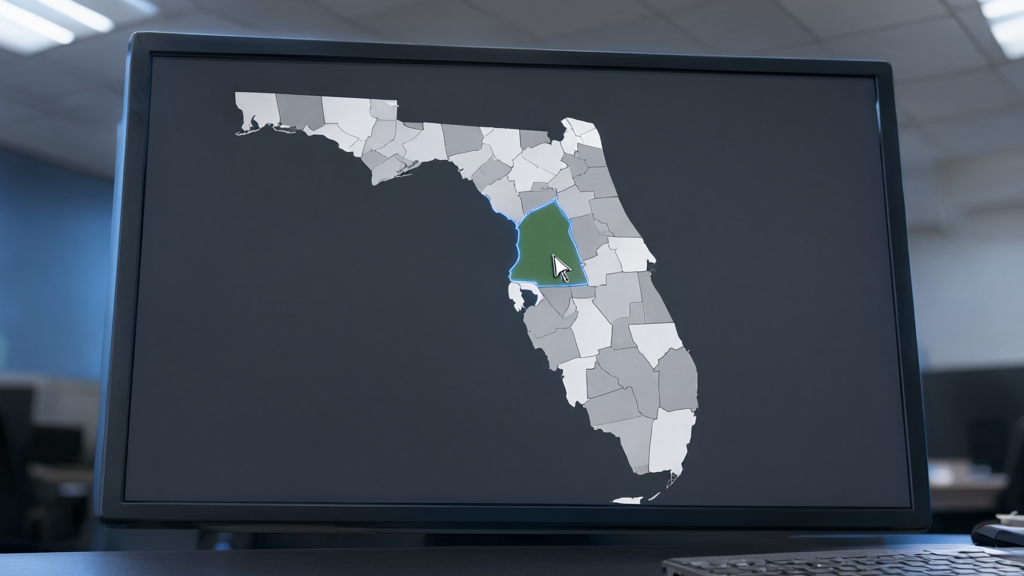
Florida approved a new congressional district plan during the 2026 Fourth Special Session. House Bill 1, titled Establishing the Congressional Districts of the State, was approved by the Governor on May 4, 2026, and later recorded as Chapter No. 2026-229.
The official bill description says the measure redraws Florida's congressional districts using the 2020 U.S. Census and a plan identified as EOGPCRP2026. It also reenacts provisions concerning elections for the U.S. House, makes electronic maps the official district maps, addresses severability, and provides for applicability.
What the official record establishes
H0001 was sponsored by Rep. Jenna Persons-Mulicka. The official bill page tracks the measure through the special session and links to the enrolled text, votes, and other legislative records.
The enrolled measure identifies the legal district plan. Readers who want to inspect the actual boundaries should use the enrolled bill text and maps, rather than relying on a headline or a summary of the plan.
The legislative history shows committee and floor action over April 28 and April 29. It was ordered enrolled after both chambers passed it, presented to the Governor on May 4, and approved that day. The chapter number was recorded on July 1.
What the votes show
The House passed H0001 on third reading by 83-28, with eight members not voting. The House roll call identifies each recorded vote.
The Senate passed it on third reading by 21-17, with two members absent. The Senate roll call provides the individual record.
Before the floor votes, the House Select Committee on Congressional Redistricting reported the bill favorably by 8-3. Those totals show that the measure drew recorded opposition. They do not, by themselves, explain why any legislator voted yes or no.
The questions a map raises
A district map determines which voters are grouped together for congressional elections. That makes the lines themselves more important than a bill title. Useful questions for any map include:
- Which counties, cities, and communities are divided between districts?
- How do the new districts compare with the prior map?
- Where can voters find an address-level district lookup?
- What public testimony, map data, or legal analysis accompanied the plan?
Those questions require map and supporting-document review. The bill's short description and vote totals cannot answer them on their own.
What this article does not claim
The saved legislative record does not provide a party-by-party vote analysis, a finding about the fairness of the lines, a fiscal estimate, or a legal ruling about the plan. This article therefore does not characterize the map as partisan or nonpartisan and does not assign motives to supporters or opponents.
For primary-source research, start with the Florida Legislature bill page, inspect the enrolled plan, and use the linked roll calls to see how individual legislators voted.